
Forests have long been seen as one of our most important natural solutions to climate change. They absorb carbon dioxide, store it in biomass and soils, and help regulate global temperatures. However, new research from Sweden is challenging a critical assumption: that all forests provide the same climate benefits.
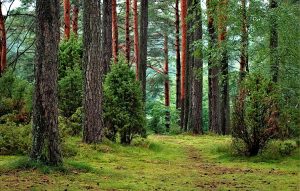
The findings suggest that how we manage forests can dramatically influence their ability to store carbon, with important implications for climate policy, land management, and carbon accounting in Australia and globally.
A closer look at carbon storage in boreal forests
A recent study led by researchers from Stanford University and Lund University examined carbon storage across Sweden’s boreal forest region, one of the largest terrestrial carbon stores on Earth.
Researchers compared undisturbed old-growth forests with intensively managed plantation forests. These managed forests are typically clear-cut on rotation cycles of 60 to 120 years and replanted as single-species stands.
The results were striking:
- Old-growth forests store up to 83% more carbon per hectare than managed forests when excluding harvested wood products
- Even when accounting for carbon stored in timber products, natural forests still store about 72% more carbon
- The difference in carbon storage is far greater than previously estimated, by a factor of 2.7 to 8 times
These findings suggest that conventional carbon accounting may significantly overstate the climate benefits of managed forest systems.
The soil carbon factor that changes everything
One of the most important discoveries in the study is where carbon is stored.
In old-growth forests, carbon is not just stored in trees. It is primarily stored underground.
Researchers found that:
- Approximately 64% of total carbon in undisturbed forests is stored in soil
- Around 30% is stored in living trees
- Only about 6% is stored in dead wood
This shifts the focus away from visible forest biomass and highlights the critical role of soil ecosystems in long-term carbon storage.
When forests are cleared, ploughed, or heavily logged, soil structure is disrupted. This leads to carbon losses that are not easily recovered, even if trees are replanted.
In other words, reforestation alone does not automatically restore the original carbon storage capacity of the ecosystem.
Managed forests versus old-growth ecosystems
The study draws a clear distinction between two forest types:
Old-growth forests are complex, biodiverse ecosystems with trees of varying ages, large amounts of dead wood, and intact soil microbial systems that have developed over centuries.
Managed forests, by contrast, are typically:
- Even-aged plantations
- Composed of a single tree species
- Regularly harvested through clear-cutting
- Subject to soil disturbance and mechanical intervention
This difference in structure and management has major implications for carbon storage.
While managed forests can still act as carbon sinks, their ability to store long-term carbon, particularly in soils, appears significantly reduced compared to intact ecosystems.
Why this matters for global climate strategies
Many global climate models rely heavily on forests to offset emissions. This includes assumptions about increasing timber production, expanding bioenergy, and scaling up afforestation and reforestation projects.
However, the Swedish research suggests these assumptions may need to be revisited.
Key concerns include:
- Carbon benefits from harvested wood may be overestimated or delayed over long time periods
- Soil carbon losses from logging are often underrepresented in carbon accounting
- Climate models may not fully capture the long-term impact of repeated forest disturbance
The researchers estimate that restoring managed forests to the carbon levels of old-growth systems could prevent billions of tonnes of CO2 from entering the atmosphere.
Relevance for Australia’s land and carbon future
Although this study focuses on northern boreal forests, the implications are highly relevant for Australia’s environmental and land management context.
Australia faces ongoing challenges in balancing:
- Forestry and land use pressures
- Biodiversity conservation
- Carbon offset and net zero commitments
- Land restoration and rehabilitation projects
This research reinforces a critical message for policymakers and industry:
Not all carbon offsets deliver equal climate outcomes.
In many cases, protecting existing intact ecosystems may provide greater and more immediate carbon benefits than restoration projects alone.
It also highlights the importance of considering soil carbon in environmental assessments, not just above-ground vegetation.
For Australia, this is particularly relevant in ecosystems such as native forests, savannas, and grasslands, where soil carbon plays a significant but often underappreciated role in total carbon storage.
Rethinking forest management and carbon accounting
The findings support a broader shift in environmental thinking. Effective climate strategies may need to prioritise:
- Protection of intact and high-value ecosystems
- More accurate inclusion of soil carbon in accounting frameworks
- Reduced reliance on short rotation forestry as a carbon solution
- Integration of biodiversity outcomes alongside carbon goals
The study also raises questions about how carbon credits and offsets are calculated, particularly where land disturbance is involved.
If soil carbon losses are not fully accounted for, the true climate impact of forestry practices may be underestimated.
Looking ahead
As climate targets become more ambitious, the role of forests will remain central to global mitigation strategies. However, this research highlights that the quality and condition of forests matter just as much as the quantity.
For Australia, this presents an opportunity to lead in evidence-based land management, ensuring that carbon strategies are grounded in a full understanding of ecosystem function, particularly below ground.
At 4t, we help organisations navigate these complex environmental challenges, combining scientific insight with practical, compliant, and forward-thinking solutions that support both sustainability outcomes and long-term resilience.
Source
This article is based on research originally published by Stanford University.
Read the original article here: https://sustainability.stanford.edu/news/shocking-carbon-discovery-swedens-forests
Bronwyn Reid | 4t Consultants
April | 2026